

Commercial Solar Installation San Diego: Mitigating SDG&E Volatility as Underwriting Risk
- Tony Millan
- Mar 3
- 5 min read

For commercial property owners and asset managers in Southern California, the traditional approach to utility expenses has reached a breaking point. In the San Diego market, energy is no longer a manageable line item; it has evolved into a significant variable that threatens the stability of pro forma projections. When evaluating the long-term viability of an asset, commercial solar installation San Diego must be viewed through the lens of infrastructure hedging rather than a simple sustainability initiative.
The primary challenge facing the market today is that utility expenses are increasingly acting as a material underwriting risk. For those looking to convert underutilized space into a predictable financial instrument, the Rooftops Into Revenue™ strategy provides a structured framework to neutralize this volatility. By stabilizing operating expenses (Opex) and protecting Net Operating Income (NOI), solar infrastructure serves as a hedge against the aggressive rate structures of San Diego Gas & Electric (SDG&E).
The Quantified Risk of SDG&E Volatility
Underwriting a commercial asset requires a high degree of certainty regarding future cash flows. However, SDG&E’s rate trajectory over the last several years has introduced a level of unpredictability that traditional models often fail to capture. Since the onset of the COVID-19 pandemic, commercial rates in San Diego have surged by 104%. With projected annual increases of approximately 10% for the foreseeable future, the risk of margin compression is no longer theoretical: it is an active threat to debt service coverage ratios (DSCR).
When SDG&E volatility as underwriting risk is left unaddressed, the valuation of the property is at the mercy of the utility’s regulatory filings and infrastructure spending. Every unforecasted spike in energy costs directly erodes the bottom line. For a triple-net (NNN) lease, these costs are passed to tenants, potentially impacting lease renewal rates and tenant solvency. For full-service or modified gross leases, the impact is even more immediate, directly decreasing the owner's yield.

Shifting from "Savings" to Infrastructure Hedging
The commercial solar industry has historically relied on "savings" gimmicks to market its products. For institutional investors and sophisticated owner-occupiers, this language is insufficient. The conversation must shift toward capital expenditure (CapEx) that yields a predictable internal rate of return (IRR) by mitigating a known variable cost.
Deploying a commercial solar installation in San Diego is a strategic move to fix the cost of energy for 25 to 30 years. By generating power on-site, a property owner essentially enters into a fixed-cost contract with their own roof. This replaces a significant portion of a volatile, escalating expense with a fixed, depreciable asset. This transition from variable Opex to a fixed asset value is the core of the Rooftops Into Revenue™ philosophy.
Underwriting Assumptions and Net Operating Income
In a high-interest-rate environment, preserving NOI is paramount for maintaining property valuations. When an appraiser or a lender looks at a San Diego asset, they are increasingly scrutinizing the "energy intensity" of the building. A property that is 100% dependent on the grid carries a higher risk profile than one with localized, resilient energy infrastructure.
The impact on NOI is twofold:
Expense Reduction/Stabilization: By offsetting grid consumption, the property reduces its exposure to peak demand charges and time-of-use (TOU) rate hikes.
Revenue Generation: Through structured PPA (Power Purchase Agreement) models or tenant rebilling strategies, the rooftop becomes a secondary revenue stream, effectively increasing the property's yield without increasing the physical footprint.

Post-2025 Regulatory Context: The One Big Beautiful Bill Act
The legislative landscape for energy in California underwent a seismic shift with the passage of the One Big Beautiful Bill Act in July 2025. This legislation redefined how commercial entities interact with the grid and emphasized the importance of self-generation and storage. For San Diego businesses, this means that the window for "waiting and seeing" has closed. The current federal and state incentive structures are designed to reward early adopters of large-scale infrastructure.
Navigating these new regulations requires a partner that understands the intersection of energy technology and commercial finance. Our Rooftops Into Revenue™ model is specifically designed to align with these new regulatory realities, ensuring that your solar deployment is treated as a financial instrument rather than a construction project.
Mitigating Peak Demand and NBT Economics
Modern commercial solar installation San Diego strategies must account for the Net Billing Tariff (NBT) economics that have replaced older net metering structures. The value of solar is no longer just about the energy exported to the grid; it is about the "avoided cost" of expensive peak energy.
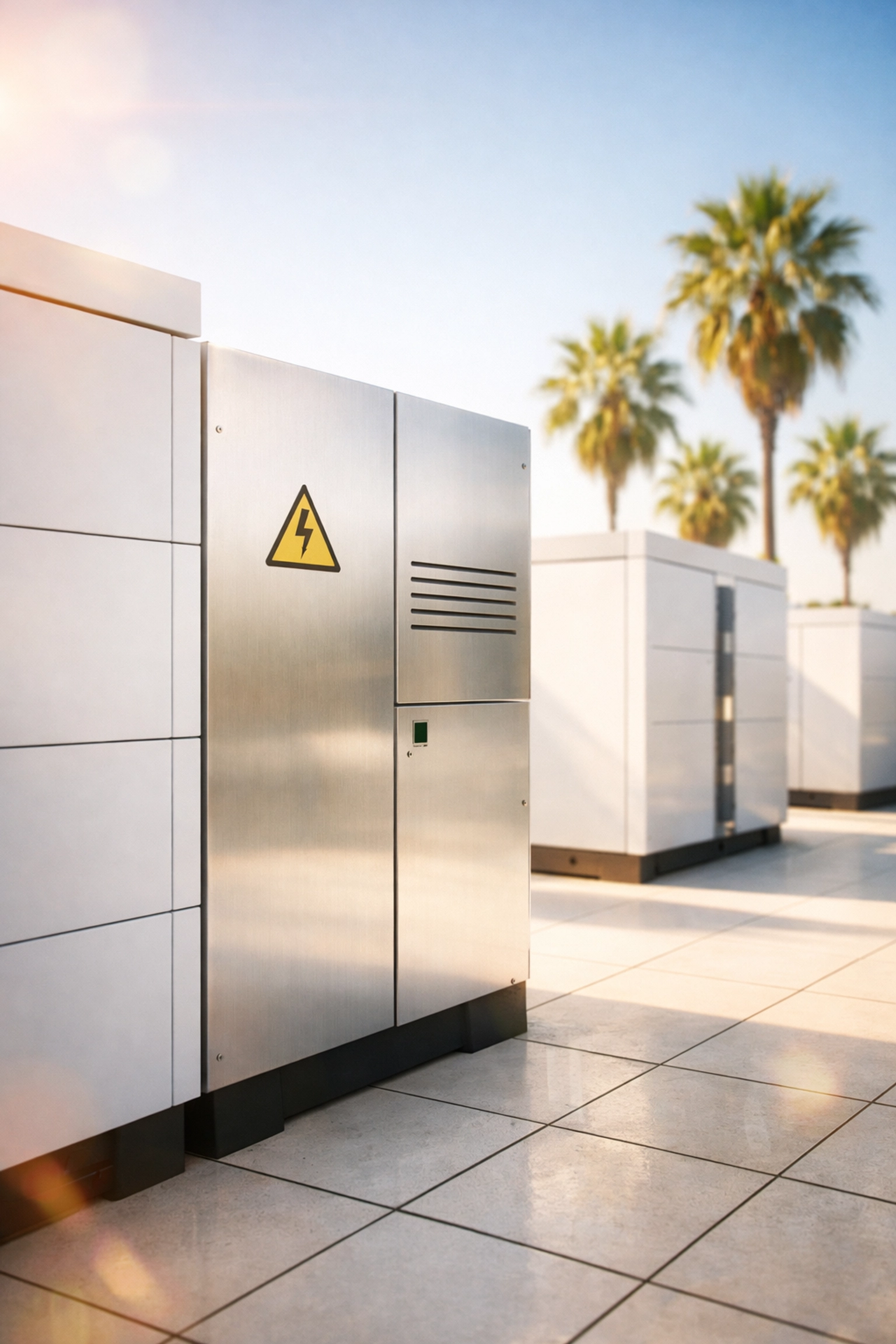
San Diego’s TOU windows are some of the most aggressive in the country. Peak pricing often occurs when solar production is ramping down in the late afternoon. This is where the integration of battery storage becomes critical for underwriting. A solar-plus-storage system allows a building to "peak shave": using stored energy during the most expensive hours of the day: to drastically reduce demand charges that can often account for 30-50% of a commercial electric bill.
Debt Service Coverage and Loan Covenants
For properties with significant debt, energy volatility can lead to technical defaults if NOI drops below a certain threshold. By stabilizing the energy expense, solar infrastructure provides a "floor" for the property's financial performance. Lenders are becoming increasingly sophisticated in their understanding of these dynamics. In some cases, the implementation of a solar hedge can lead to more favorable financing terms, as it demonstrably lowers the risk profile of the asset's cash flow.
The Rooftops Into Revenue™ Infrastructure Strategy
At Save On Solar Now, we don’t just install panels; we engineer financial certainty. Our approach to commercial solar installation San Diego begins with a deep dive into the building’s load profile and the owner's long-term hold strategy. We view the rooftop not as a maintenance liability, but as a high-yield asset.
The Rooftops Into Revenue™ framework focuses on:
Asset Monetization: Turning a dormant roof into an income-producing asset.
Tax Efficiency: Maximizing the benefits of the Investment Tax Credit (ITC) and MACRS depreciation.
Operational Resilience: Reducing reliance on an aging and increasingly unstable regional grid.
Market Differentiation: Providing a hedge that makes the property more attractive to high-quality tenants who are also seeking energy cost certainty.
Save On Solar Now | Infrastructure for Rooftop Revenue
Conclusion: Securing the Pro Forma
The era of cheap, predictable energy from the grid is over in San Diego. For commercial stakeholders, the choice is between remaining exposed to SDG&E volatility as underwriting risk or taking control of the energy supply chain.
Treating solar as a core infrastructure component allows for more accurate long-term forecasting, protects the bottom line from inflationary utility spikes, and adds tangible value to the capital stack. As we move further into 2026, the gap between "energy-hedged" assets and "grid-dependent" assets will continue to widen, influencing everything from cap rates to tenant retention.
The objective is clear: decouple your property's performance from the utility's rate-case filings. By applying a disciplined, infrastructure-first approach to solar, you transform a primary risk factor into a source of competitive advantage.

Comments