

Increase NOI Commercial Property: The Infrastructure Lever Most Owners Miss

For the modern commercial property owner or asset manager, the quest for Net Operating Income (NOI) growth usually follows a predictable script: push rents, tighten CAM (Common Area Maintenance) audits, and perhaps defer non-essential aesthetic upgrades. While these are the standard tools in the kit, they are increasingly hitting a ceiling.
In a market defined by escalating utility rate pressure and tightening margins, the traditional levers are no longer enough to move the needle on a property’s valuation in a meaningful way. There is, however, a massive infrastructure lever that most owners miss: not because it's hidden, but because it’s historically been viewed as a "utility expense" rather than a "revenue asset."
We’re talking about your building's energy infrastructure. Specifically, the transition from being a passive consumer of expensive grid power to an active producer of high-margin energy revenue. This is the core of the Rooftops Into Revenue™ strategy.
The NOI Math: Why Energy is the Final Frontier
In commercial real estate, every dollar saved in operating expenses (OpEx) or generated in ancillary income is multiplied by the market cap rate to determine asset value.
Consider the math: If your portfolio is operating at a 5% cap rate, every $50,000 in annual NOI you "find" adds $1,000,000 to your property's valuation. Most owners spend months negotiating vendor contracts or challenging property tax assessments to find $50,000. Yet, they allow their rooftops to sit vacant while paying uncapped, volatile rates to utility providers.
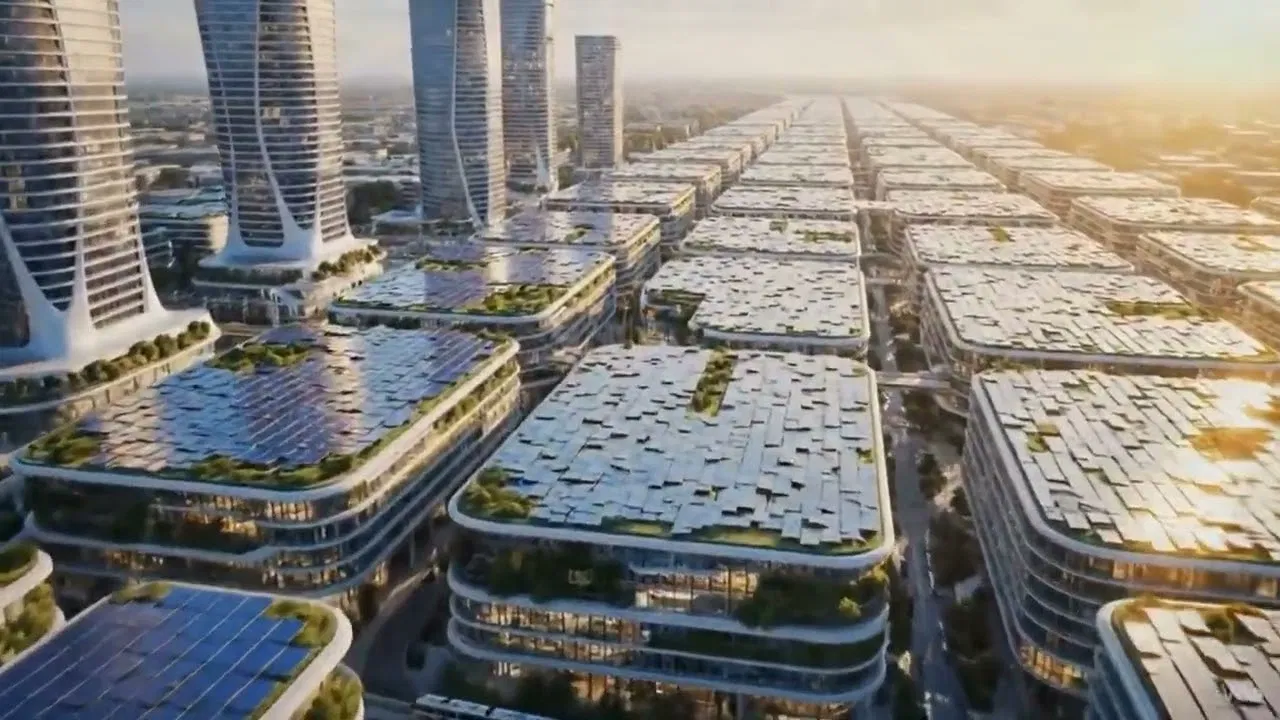
Energy infrastructure is the only building system that can transition from a liability to a profit center. When you implement a structured solar and storage solution, you aren't just "going green." You are performing a Utility Expense Repositioning. You are taking a line item that is subject to the whims of utility commissions and turning it into a predictable, controllable, and underwritable asset.
The Infrastructure Lever: Beyond Simple "Savings"
Most commercial owners ignore solar because they view it through the lens of "residential-style savings": a few bucks off a bill. This is a mistake in underwriting. In the commercial and industrial (C&I) sector, energy infrastructure is a sophisticated financial instrument.
1. Demand Charge Mitigation
For many commercial properties, "demand charges": the fees based on the highest amount of power used during a single billing period: can account for up to 50% of the total utility bill. Traditional efficiency measures (like LED lighting) help, but they don't solve the demand peak.
By integrating advanced battery storage systems, owners can "shave" those peaks. This isn't just saving energy; it's re-engineering the building's load profile to optimize NOI.
2. Structured Revenue Streams
With the Rooftops Into Revenue™ model, the goal isn't just to offset the owner's meter. It’s to monetize the entire footprint. Whether you are operating a Triple Net (NNN) lease property or a full-service commercial hub, there are ways to structure the energy delivery so that the building owner captures the margin that previously went to the utility company.
Underwriting the Shift: How Infrastructure Impacts Cap Rates
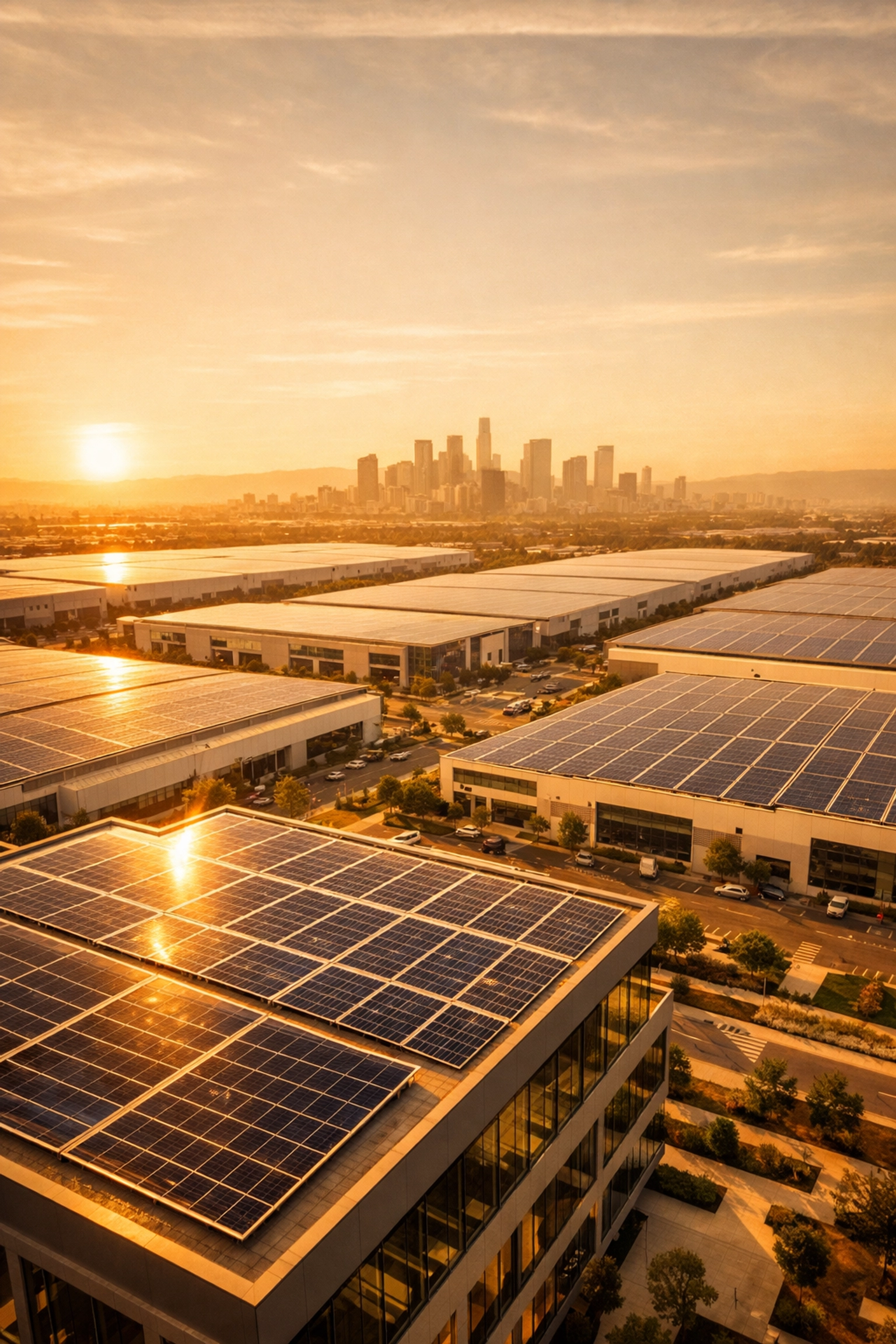
Investors and appraisers value predictability. When you look at a Pro Forma, the energy expense is usually a variable that everyone assumes will increase. By locking in your energy costs through on-site generation and storage, you introduce a level of certainty that the market rewards.
For a deep dive into the technical risks of utility demand structures, see our analysis on SDG&E Demand Charges: The Silent Margin Killer for San Diego Multifamily.
Furthermore, the long-term benefits of clean energy sources go beyond the immediate cash flow. Buildings with modernized energy infrastructure are increasingly viewed as "Class A" assets that are insulated from future carbon taxes or building performance standards. This reduces the "terminal cap rate" risk when it comes time to exit the asset.
If you are evaluating a long-term ROI of solar energy for businesses, you have to look at the "Yield on Cost." If the cost of the infrastructure deployment is $500k, and it generates $100k in annual NOI (through savings and revenue), that’s a 20% cash-on-cash return on the capital improvement. Compare that to the returns on a standard tenant improvement (TI) package, and the infrastructure lever becomes the obvious choice.
The Rooftops Into Revenue™ Strategy
At Save On Solar Now, we don't just sell panels; we architect revenue. The Rooftops Into Revenue™ (RIR) strategy is a disciplined approach to identifying the latent value in your commercial portfolio.
The strategy focuses on three core pillars:
Portfolio-Wide Assessment: Identifying which assets in your portfolio have the highest energy density and rooftop-to-footprint ratio.
Regulatory Optimization: Navigating the complex landscape of utility tariffs to ensure the system is designed for maximum financial impact, not just maximum energy production.
Financial Engineering: Utilizing tax credits, accelerated depreciation, and structured financing to ensure the project is accretive to NOI from Day 1.

Avoiding the "Commodity" Trap
Many owners make the mistake of treating solar as a commodity. They call three local installers and ask for a price per watt. This is the quickest way to kill your ROI.
Commercial energy infrastructure is about integration. It’s about how the solar array talks to the battery storage, and how the storage interacts with the building's HVAC and BMS (Building Management System). It’s about entering a new era of IoT where your building is a smart node on the grid.
A poorly designed system might produce a lot of power when you don't need it and nothing when your demand charges are peaking. A Save On Solar Now engineered solution is designed around the load profile of the tenant and the financial goals of the owner.

The Time to Act is During the Underwriting Phase
If you are currently in the process of acquiring a new commercial asset or refinancing an existing one, that is the ideal time to pull the infrastructure lever. By including the energy upgrade in your capital stack, you can often fund the entire project through the primary loan, effectively using low-cost institutional capital to create high-yield energy revenue.
The window for maximum incentive capture is also shifting. While the future of solar energy after ITC changes remains a topic of discussion in legislative circles, the current federal and state environment provides a massive tailwind for owners who move now. Waiting only increases the opportunity cost of every kilowatt-hour you continue to buy at retail rates.
Scalability Across Portfolios
The beauty of the infrastructure lever is that it is repeatable. Once you have a "template" for Rooftops Into Revenue™ on one industrial park or office complex, you can roll it out across your entire portfolio. This creates a compounding effect on your total Net Operating Income.
Imagine a 10-property portfolio where each property sees a $40,000 increase in NOI. That’s $400,000 in total portfolio NOI. At a 5% cap, you’ve just created $8,000,000 in equity out of thin air: or rather, out of the sunlight hitting your rooftops.
Conclusion: Stop Leaving Money on the Roof
The "Infrastructure Lever" isn't a secret, but it requires a shift in perspective. You have to stop looking at your roof as a maintenance liability that needs a new membrane every 20 years. You have to start looking at it as an un-utilized floor of your building that could be generating high-margin revenue.
If you are serious about increasing NOI and building a resilient, future-proof commercial portfolio, it’s time to move beyond the standard OpEx cuts. It’s time to turn your rooftops into revenue.
To see how the Rooftops Into Revenue™ strategy can be applied to your specific asset or portfolio, reach out to our team of commercial infrastructure experts.
Start your Rooftops Into Revenue™ assessment today: Visit https://www.getsosnow.com/rir?utm_source=blog&utm_medium=content&utm_campaign=noi_lever or call us at (858) 400-3524.
Todd Masters CEO, Save On Solar Now
Comments