

SDG&E Demand Charges: The Silent Margin Killer
- Tony Millan
- Mar 15
- 5 min read

If you own or manage commercial real estate in San Diego, you’re already well aware that SDG&E has some of the highest utility rates in the country. But for most owners, the focus is entirely on the price per kilowatt-hour (kWh): the actual energy consumed. While consumption matters, there is a much more aggressive predator lurking on your monthly statement: Demand Charges.
In the world of commercial asset management, demand charges are the "silent killer" of Net Operating Income (NOI). Unlike consumption charges, which scale with how much power you use over a month, demand charges are calculated based on your highest point of usage in a tiny 15-minute window.
If you aren't accounting for these spikes, you aren't just paying a high utility bill; you are actively devaluing your asset. For those looking into commercial solar installation San Diego, the goal isn't just to "go green": it’s to deploy a financial instrument that mitigates this specific operational risk.
The Anatomy of a Demand Charge: kW vs. kWh
To manage what you can’t see, you have to understand the distinction between "energy" and "power."
Energy (kWh): This is the total volume of electricity your building uses. Think of it like the odometer on a car: it tracks the total distance traveled.
Power (kW): This is the rate at which you use that energy. This is the speedometer.
SDG&E charges you for the "distance" (kWh), but for commercial accounts, they also charge you for your "top speed" (kW). If your building turns on every HVAC unit, elevator, and industrial chiller at 2:00 PM on a Tuesday, your "speedometer" hits a peak. Even if you turn everything off 20 minutes later, SDG&E bills you for that peak as if you were running at that speed for the entire month.
For many San Diego commercial properties, demand charges can represent 30% to 50% of the total utility bill. This is a non-negotiable expense that most owners treat as a "cost of doing business." It isn't. It’s a margin leak that can be plugged.
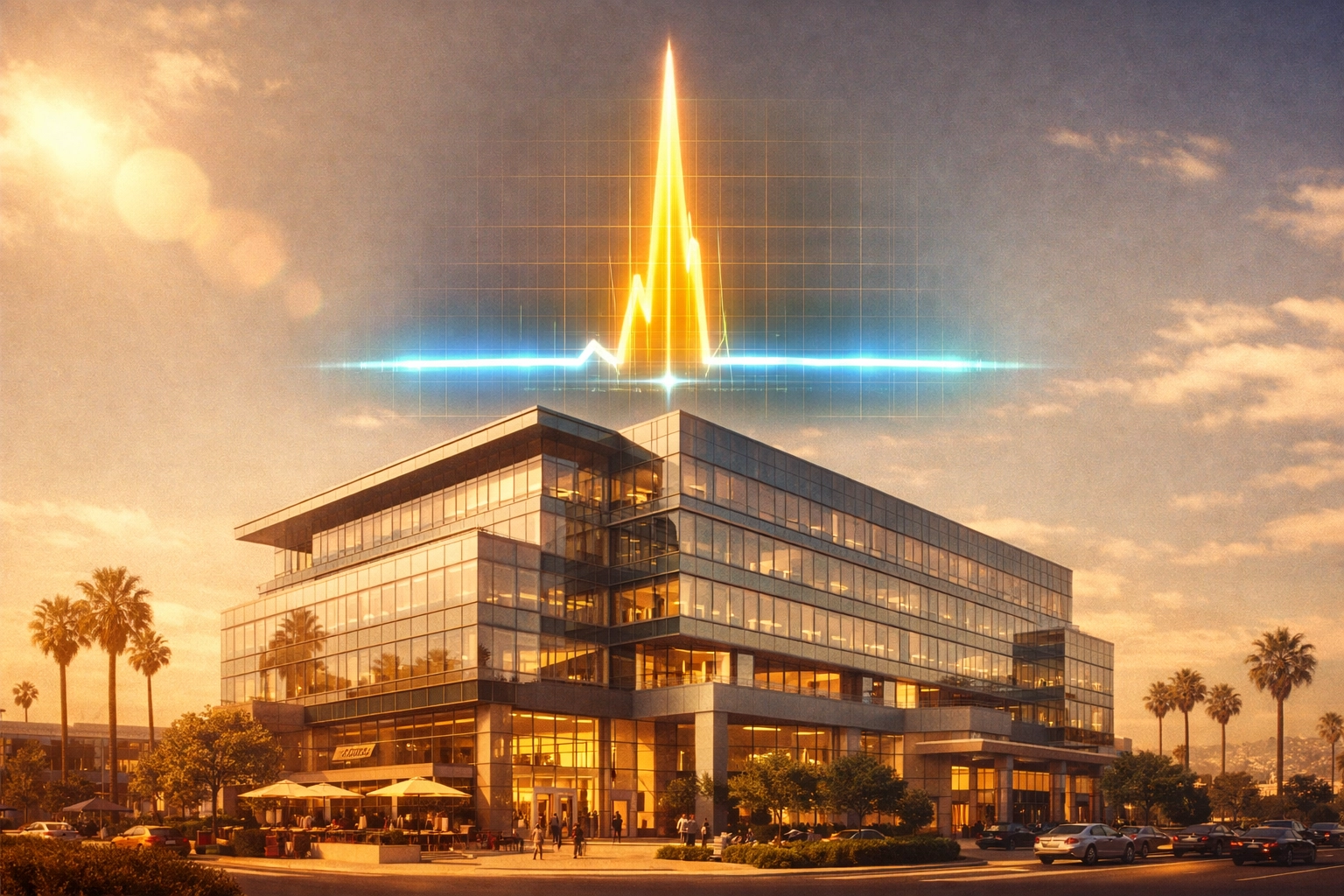
Why San Diego Is a Special Case for Demand Charges
SDG&E utilizes a variety of rate structures (like AL-TOU or DG-R) that include several types of demand charges:
Non-Coincident Demand: This is the absolute highest peak your building hits at any time during the month, regardless of when it happens.
On-Peak Demand: This is the highest peak hit during the most expensive hours of the day (usually 4:00 PM to 9:00 PM).
Because San Diego’s grid is under constant strain, the utility uses these charges to force commercial users to smooth out their usage. If you don't, you pay a premium that goes straight to the utility's bottom line instead of yours.
When we look at a commercial solar installation San Diego project, we aren't just looking at the roof. We are looking at the load profile of the building to see where these spikes occur and how we can use infrastructure to flatten them.
The Problem With Solar-Only Solutions
A common mistake commercial owners make is assuming that solar panels alone will solve the demand charge problem. Solar is incredible at reducing consumption (kWh). It wipes out the "volume" of energy you buy from the grid during the day.
However, solar is a variable resource. If a cloud passes over your building exactly when your elevators and HVAC systems kick in, your demand from the grid will spike. The utility meter records that 15-minute peak, and your demand charge for the month is set. Solar helps, but it doesn't offer the granular control needed to fully protect your NOI.
Battery Storage: The Control Layer
This is where the conversation shifts from "solar" to "energy infrastructure." To truly kill demand charges, you need a control layer: Battery Storage.
In a sophisticated Rooftops Into Revenue™ (RIR) model, we deploy batteries to act as a "peak shaver." The system monitors your building’s load in real-time. When it sees your "speedometer" (kW) approaching a certain threshold, it automatically discharges power from the battery to cover the spike.
The utility meter never sees the spike. As far as SDG&E is concerned, your building is running at a smooth, low, consistent rate. This is called Peak Shaving, and it is the single most effective way to protect commercial margins in San Diego.

NOI Math: From Utility Expense to Asset Value
Let’s look at the actual underwriting impact. In commercial real estate, every dollar saved in OpEx is a dollar added to NOI. When you apply a cap rate to that NOI, you see the true value of demand charge mitigation.
The Scenario: Imagine a multi-tenant industrial park in Mira Mesa with a consistent monthly demand charge of $4,500 due to unoptimized HVAC and machinery starts.
Annual Demand Charges: $54,000
Implementation: A commercial solar + storage system that reduces demand charges by 70%.
Annual Savings (New NOI): $37,800
Now, let's look at what that does to the building's valuation at a standard 6% San Diego cap rate:
$37,800 (New NOI) / 0.06 (Cap Rate) = $630,000 in Added Asset Value.
By installing a system that manages demand charges, the owner hasn't just "saved on power": they have increased the exit price of the property by over $600k. This is a fundamental shift in how we view energy. It is no longer an expense; it is a financial instrument.
If you want to dive deeper into how this math works across different asset classes, check out our breakdown on Commercial Solar Asset Value: Cap Rate Math Most Owners Ignore.
Underwriting the Infrastructure
When we discuss a commercial solar installation San Diego, we talk in the language of the C-suite. We aren't interested in the "vibe" of being green. We are interested in the underwriting assumptions of your next 10 years.
Risk Mitigation: Utility rates in San Diego have a historical trend of increasing 5-8% annually. Demand charges are often the first lever utilities pull to increase revenue. Fixing this cost today is a hedge against future margin compression.
Tax Efficiency: Between the Federal Investment Tax Credit (ITC) and MACRS depreciation, the government is essentially subsidizing 50-70% of the cost to increase your building's value.
Tenant Retention: In "Triple Net" (NNN) leases, reducing the load for tenants makes your square footage more competitive. In "Full Service" leases, the savings go directly into the owner's pocket.
Beyond the Panels: The "Rooftops Into Revenue™" Approach
At Save On Solar Now, we developed the Rooftops Into Revenue™ framework specifically for the San Diego market. We know that a one-size-fits-all solar kit doesn't work for a commercial owner facing $10,000 monthly demand charges.
We start with an investment-grade audit. We look at 15-minute interval data from your SDG&E account to find the "Silent Killer." We then model a system that doesn't just produce power, but manages it.
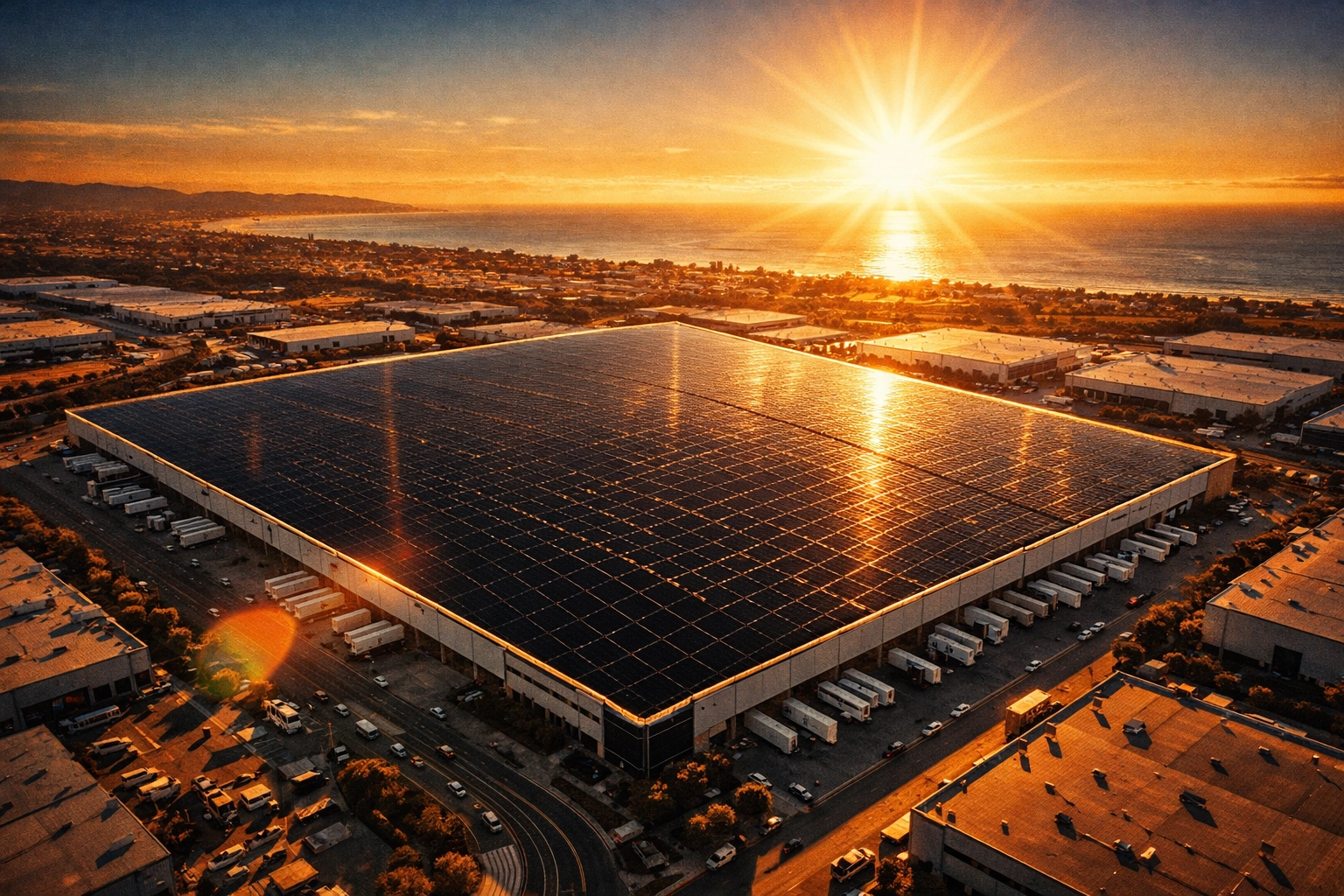
Whether it's a cold storage facility in Otay Mesa or a medical office in La Jolla, the goal is the same: convert an underutilized roof into a revenue-generating asset by eliminating the predatory demand charges that erode your margins.
Conclusion: Stop Paying for the Spikes
If you are looking at your utility bill and seeing "Demand" or "Maximum Demand" charges that make your eyes water, you are sitting on an opportunity. Every dollar you send to SDG&E for a 15-minute spike is a dollar that could be sitting in your NOI.
The technology exists to automate this. The tax incentives exist to pay for it. The only thing missing is the decision to treat your energy bill like the financial liability it actually is.
Ready to see the math on your specific asset?
We provide high-authority modeling for San Diego commercial owners who are tired of being at the mercy of the grid. We don't do "ballpark" estimates. We do underwriting.
Contact the Commercial Infrastructure Team: Phone: (858) 400-3524 Strategy:Get Your Rooftops Into Revenue™ Report

Comments